Inside Track: Building the Infrastructure for Clean Energy — The Challenge of Lithium Batteries

Lucas Lee Featured, News, Uncategorized

The complexity of innovation

As a freight forwarder that interacts with multiple industry sectors on a daily basis, we at Canaan see both the opportunity and challenges of the move toward clean energy.

The opportunities are broadly understood, with clean energy solutions often benefiting economies, the environment, and local businesses that are hoping to serve growing demand.

For those of us in logistics, the challenge we often see is that supply-chain structures and processes aren’t always able to keep up with innovation.

Whether it’s with safety regulations, or classification, or the know-how of handling and moving new machinery or parts, each jurisdiction has to work through a range of details. Once those details are determined, there’s then the additional challenge of dealing with other jurisdictions that may have very different guidelines in place.

Case Study: Lithium Batteries

A case in point is with the transport of lithium batteries, used in electric vehicles and numerous devices. While the movement of batteries might seem straightforward, it’s anything but. Treated as dangerous goods, lithium batteries are subject to many regulations and with those regulations a lot of documentation. Countries like China are regularly amending their requirements, and as a result, some shippers easily fall behind in their understanding of what documentation is required by which countries, resulting in the possibility of delays.

Adding to this complexity is the vast difference between the handling of new and used batteries. Though, according to industry experts, many used batteries still have much more life to them and should be re-used in order to reach clean energy and zero-waste goals, some jurisdictions and companies are wary of safety hazards and so the paperwork required can become a deterrent for those wanting to buy or sell used batteries between countries.

Canaan’s Expertise

Recently, we’ve taken on the challenge of managing the import of lithium batteries for one of our key customers.

The first step – securing the necessary paperwork – is not simple; we work closely with overseas vendors who may not always be familiar with the documentation requirements. In many cases, language barriers add an extra layer of complexity to the process.

Next: ensuring compliance. Compliance doesn’t just stop with us, as we need to guarantee that our third-party vendors can safely handle the cargo as well.

Packaging plays a pivotal role in this process. Lithium batteries require specific labeling and careful handling, so being attentive to detail is critical. Unfortunately, last year saw a number of accidents at some ports due to misdeclared or improperly packaged shipments. We have to get this right not just for our clients but for the safety and smooth operation of everything along the supply chain.

At Canaan, we have experts in place who understand both the big picture and the details of shipping dangerous goods, such as batteries. We help our clients strategize and then accompany the client and the shipment around each hurdle.

If you have questions about the opportunities and challenges of the clean energy sector, we’d be glad to chat with you.

Three Preparation Tips

Here are three tips that will help you prepare for the process of shipping lithium batteries:

1. Make sure you have updated information about the requirements in all the jurisdictions your shipment will travel through — the point of origin, the destination, and every potential stop in between. Don’t assume the requirements are the same — they often aren’t.

2. Different carriers have different readiness for handling dangerous goods. Working with a freight forwarder, such as Canaan, that is in constant communication with carriers, can help you find the carrier that will provide the best chance of a smooth delivery.

3. Don’t expect an expedited shipment. Items classified as dangerous goods often require planning and documentation preparation. Plan ahead by making sure you’ve given yourself enough time to absorb the unexpected.

Need more information or have more questions? Reach out to us today! sales@canaangroup.ca

Strategic Analysis: Container shipping industry navigating capacity challenges worldwide 

Lucas Lee Featured, News, Uncategorized

The global container shipping industry continues to face a significant imbalance between supply and demand, despite the recent injection of considerable vessel capacity. Maritime analysts, including Greg Knowler of the Journal of Commerce, report that the strong demand for vessels along Asia’s export trade lanes is absorbing this capacity, leading to unseasonably high volume and longer voyages exacerbated by southern Africa route deviations and port congestion.

As of mid-2024, ocean carriers have introduced nearly 1.6 million TEUs of capacity. However, this has scarcely mitigated the supply/demand discrepancies on critical routes like Asia-Europe and the trans-Pacific. Congestion currently seen at the Port of Singapore, one of the most efficient ports in the world, is a clear indication of the imbalance of demand and supply.

Moreover, major carriers are preparing for general rate increases (GRIs) and peak season surcharges (PSSs) by July 1, which could push Asia-North Europe/North America spot rates close to $10,000 per FEU, a significant increase over current levels. This scenario underscores tight market conditions and the upward pressure on freight rates.  Compounding the challenge is an equipment shortage due to the imbalance between the import and export rates.

On the strategic front, the container shipping market’s highly fragmented nature complicates demand forecasting and capacity management. Many beneficial cargo owners (BCOs) and non-vessel operating common carriers (NVOs) struggle with precise demand planning, often leaving them scrambling in periods of tight supply. To address these challenges, shippers are advised to integrate their business planning more closely with sales and operations planning (S&OP) processes, which can help anticipate changes and adjust volumes more effectively. Moreover, shippers should avoid overbooking and maintain reliable communication with carriers to ensure better flexibility and meet customer obligations.

While the industry grapples with these challenges, both carriers and shippers must navigate a landscape marked by high demand, limited capacity, and escalating rates. How long will these conditions last? There is no consensus. Some analysts say that this will continue until the end of 2024, while others believe this systematic problem will be cyclical depending on a variety of factors such as geopolitical issues, war, and continual disruptions.  To mitigate these challenges, please contact our sales team at sales@canangroup.ca for more information. 

Breaking Point at Port of Montreal: Implications for Global Trade

Rowena Lo Featured, News, Uncategorized

Negotiations to renew the collective bargaining agreement for the Port of Montreal longshore workers, which expired on December 31, 2023, are at an impasse.

The Maritime Employers’ Association (MEA) put forward what it called its ultimate settlement offer on April 17, which was subsequently rejected by the union (CUPE 375, representing more than 1200 members) as it allegedly regressed workers’ conditions. Of the 90% of members who voted, 99.54% refused the offer, indicating a profound dissatisfaction with the MEA’s stance.

Union president Martin Lapierre criticized the MEA and the maritime company representatives on its board for their apparent provocation tactics and legal confrontations aimed at undermining the union. The union had hoped that the new president of the Montreal Port Authority (MPA) would facilitate labor relationships; instead, the MPA has complicated negotiations, challenging a recent decision by the Canada Labour Relations Board on essential services.

Amidst this tension, the union remains committed to reaching an agreement, having offered 19 potential negotiation dates through the end of May, which the MEA has not yet confirmed.

For customers and stakeholders of the Port of Montreal, this deadlock suggests potential disruptions in shipments and operations. As the negotiations continue without resolution, businesses relying on this major transport hub might experience delays and increased logistical challenges. The situation underscores the importance of monitoring developments closely, as the outcome of these negotiations could significantly impact regional shipping and supply chains.  Please contact sales@canangroup.ca for more details in how to mitigate and circumvent using the Port of Montreal until this resolved. 

Inside Track: Three Things We’re Watching in 2026

Lucas Lee Featured, News, Uncategorized

At Canaan, we pride ourselves on delivering for our clients efficiently in the present while also helping our clients plan for the future. As we look toward 2026, here are three things we’re watching closely. 

💸 Ongoing trade disputes and tariffs

Unfortunately, the trade disputes initiated in 2025 will continue into the new year, meaning ongoing operational challenges for Canadian shippers. 

Canada’s supply chains are deeply integrated with the United States, with over 70% of exports flowing south and a significant portion of imports transiting through U.S. ports. This interdependence means that any shift in U.S. trade posture—whether through tariffs, quotas, or enforcement—has immediate and amplified consequences for Canadian businesses.

This exposure becomes more pronounced as USMCA (CUSMA) reaches its first mandatory joint review in August. While the agreement does not automatically expire, the review introduces meaningful uncertainty around enforcement standards, sector-specific rules, and the long-standing assumption of duty-free North American trade.

For many Canadian companies, particularly in manufacturing, energy, forestry, and construction, tariffs now influence landed costs, sourcing strategies, pricing, and long-term customer commitments. Companies that continue to manage trade reactively—responding only after goods are in transit or costs are already incurred—face increasing margin erosion and operational disruption.

As a result, trade management is shifting from a back-office function to a strategic capability. Customs brokers and trade advisors are playing a more central role, helping companies anticipate policy changes, assess exposure, and adjust sourcing or origin strategies before disruption occurs. At Canaan Group, this trade expertise is integrated directly into logistics execution, allowing compliance, customs, and freight decisions to be made together.

Western Canadian companies, particularly in British Columbia and Alberta, are already adapting—diversifying supply chains, reducing reliance on single-country origins, and building resilience ahead of 2026.

In an era of persistent trade volatility, the future of Canada’s tariffs will not be defined solely by policy decisions, but by how early and how well Canadian companies prepare. The competitive advantage will belong to those that make informed trade decisions before change arrives—not after.


🧠 How Canadian Companies Should Think About AI in Their Supply Chains

For Canadian companies, AI in logistics is no longer about experimentation—it’s about execution. As mentioned in a previous Inside Track article, though there is much still to be decided about which AI companies and applications will survive the hype cycle, AI is already delivering value that needs to be captured if companies are to stay competitive. 

Margins are tighter, trade and customs complexity is rising, and customers expect predictability. In this environment, AI only creates value when it helps answer practical questions: Which shipment is at risk? Where will costs escalate? What decision needs to be made now—not later?

Companies should be cautious of AI that stops at dashboards. Visibility alone doesn’t reduce cost or risk. The real advantage comes from decision support—AI that connects shipment data, customs information, routing, and cost signals to predict problems before they occur, whether delays, demurrage, or compliance exposure.

There are three areas companies should be watching closely:

  1. Exception prediction – identifying risks before they disrupt operations
  2. Landed cost and trade modeling – understanding exposure before committing to suppliers or lanes
  3. Flow optimization – reducing dwell, empty moves, and inefficiencies without adding assets

At Canaan Group, AI is applied directly within customs, forwarding, and execution workflows—so insights lead to action, not just reporting.

Looking ahead, industry gatherings such as Manifest and Web Summit Vancouver 2026 (formerly Collision), where Canaan and Trakking have participated, reflect a clear shift: AI is moving from concept to core infrastructure.

The companies that succeed will be those using AI to act earlier, decide faster, and reduce avoidable risk—not those chasing technology for its own sake.

🌏 Expanding Beyond North America: Why 2026 Is the Year Canadian Companies Look Outward

As global trade patterns shift, Canadian companies are being encouraged to think beyond traditional North American corridors. This message has been increasingly reinforced by Prime Minister Mark Carney, who has emphasized the importance of diversification, resilience, and reducing over-dependence on any single market.

For Canadian exporters and importers, this creates a clear opportunity: 2026 is not the year to explore new markets—it’s the year to be present in them.

The Canadian government has been actively promoting market expansion through programs and on-the-ground support, particularly via Canadian Trade Commissioner Service. Trade Commissioners offer practical assistance—local market intelligence, partner introductions, regulatory guidance, and risk mitigation—that can significantly shorten the learning curve when entering unfamiliar regions.

Several markets stand out as priorities:

  • China – still critical for manufacturing, sourcing, and consumer demand despite geopolitical complexity
  • India – rapidly expanding middle class, manufacturing growth, and supply-chain diversification
  • Middle East – infrastructure, energy, and logistics investment creating demand for Canadian expertise
  • European Union – stable, regulated, and accessible through CETA for Canadian companies

Canadian companies without a presence or strategy in these regions risk being structurally behind competitors who are already building local relationships.

At Canaan Group, supporting customers through market entry—customs, trade strategy, logistics execution, and local partnerships—is becoming as important as moving freight.

In 2026, growth will favour companies that move early, diversify intelligently, and execute globally with confidence.

Inside Track: 2025 in Review — Three Shifts in the Canadian Logistics Landscape

Lucas Lee Featured, News, Uncategorized

As 2025 comes to a close, one theme clearly defined Canada’s logistics and trade environment: transition. From digital compliance and trade policy volatility to rising costs and efficiency pressures, the industry experienced meaningful change. At Canaan Group, these shifts were not surprises—we positioned ourselves early to help customers navigate them with confidence.

Below are the three defining takeaways from 2025 and how Canaan responded.


1. Canada’s Logistics Industry Took a Major Step Toward Digitalization

2025 marked a clear acceleration in Canada’s move toward a more digital logistics ecosystem.

The rollout of CARM (CBSA Assessment and Revenue Management) fundamentally changed how duties, taxes, and security are managed. At the same time, shipping lines such as Hapag-Lloyd advanced initiatives around e-Bills of Lading, signaling a broader shift toward paperless trade documentation. Across the industry, online platforms and automation tools continued to gain traction as stakeholders sought greater visibility, speed, and compliance.

Canaan was well positioned for this transition. Our customs brokerage, systems, and internal workflows were already aligned with digital processes, allowing us to guide customers through CARM implementation while supporting the industry’s broader move toward automation and data-driven logistics.

Digital trade is no longer optional—it is becoming the standard.


2. Tariffs Dominated the First Half of the Year—and Reinforced the Value of Expertise

Few topics created more stress in 2025 than tariffs.

The first six months were marked by uncertainty, frequent changes, and heightened scrutiny. Most recently, Canada’s updates to steel tariffs and quota frameworks, including public commentary from Mark Carney, added another layer of complexity for importers.

Because Canaan is a licensed customs broker, we were able to interpret these changes quickly, advise clients accurately, and reduce disruption during an otherwise chaotic period. More importantly, these pressures pushed many Canadian companies—particularly in Alberta and British Columbia, given their proximity to transpacific trade—to rethink product sourcing and market strategies.

This is where preparation mattered most.


3. TradeSuccess: Supporting Market Diversification and What Comes Next

In November 2024, Canaan launched a new division: TradeSuccess.

Throughout 2025, TradeSuccess supported Canadian companies exploring new products and new markets, with a particular focus on China and Southeast Asia. The goal was not just compliance, but growth—helping clients understand trade structures, tariffs, sourcing strategies, and market entry considerations in an increasingly complex global environment.

As costs continue to rise across the supply chain—through terminal fees, labor, tariffs, and regulatory requirements—operational efficiency has become a top priority for shippers.

Canaan continues to invest in automation tools and digital workflows to help clients operate smarter, not harder.

Looking ahead, TradeSuccess will be a major focus in 2026 as we expand this capability to support deeper market intelligence, diversification strategies, and end-to-end trade advisory.

Inside Track: 2025 Marked the True Arrival of AI — what will 2026 Bring?

Lucas Lee Featured, News, Uncategorized

One thing was clear during the 2025 OceanX Logistics Network AGM, which we were excited to attend recently in Cairo, Egypt: Artificial Intelligence is no longer a distant concept — it is already here. Companies will need to begin integrating AI-driven tools in order to remain competitive and avoid falling behind.

Depending on who you ask, this might seem like old news or it may seem like we are simply boosters for unproven technology. But here’s where the various discussions and presentations at the event provided helpful perspective based on history. While it is true that technological development often follows a “hype cycle” — technological breakthrough followed by huge speculative investment, fueled by intense media interest, and then a bursting of the bubble when some projects/companies fail to succeed — what is also true is that each of these cycles inevitably produce real and lasting value. Take these notable hype cycles as an example: 

  • Dot-com: led to Amazon, modern e-commerce, and digital marketplaces
  • Metaverse: enabled enterprise-level simulations, digital twins, and architectural visualization
  • Blockchain: brought stablecoins and robust infrastructure for consortium systems

Given this pattern, the key question becomes: What tangible and transformative value will AI ultimately deliver to our industry?

Some of our freight forwarder partners shared that they have already implemented AI solutions for data-entry and document-processing tasks. While these systems are not yet 100% automated and still require human oversight, there was strong consensus that entry-level data and administrative roles will likely be the first to be replaced or fundamentally reshaped by AI.

Another important insight was the expectation that over the next decade, the logistics and freight forwarding sector will increasingly require professionals with strong IT, data analytics, and automation expertise, rather than relying solely on traditional operational freight-forwarding skills. This marks a significant shift in the talent profile our industry will need in order to remain relevant.

Companies that want to remain competitive can’t stay in “wait and see” mode out of fear that the hype is outpacing value. Instead, now is the time to join the conversation so that you can more easily separate fact from fiction and proactively create value using the tools that are emerging. 

Canaan is here to help. We have launched a software development company that is working on AI solutions for the logistics industry. We’d be keen to discuss with you where the challenges and opportunities are for your business so that our software can better serve you. In addition, Canaan is proud of how our consulting work through the decades has supported clients by combining our historical and on-the-ground knowledge of logistics with keen insight into what is emerging within our industry. Bringing together past, present, and future — for the benefit of the people we work with — has always been what we do best; this approach to logistics has prepared us to serve our clients well in this new AI age. Please reach out today!

Inside Track: Powering Progress for a Renewable Energy Leader

Lucas Lee Featured, News, Uncategorized

At Canaan Group we are experts in solving problems for our clients today while also applying our expertise toward creating a better tomorrow. Here’s one recent success story:

A renewable energy company headquartered in the Pacific Northwest has been rapidly expanding its solar panel installations across North America. With manufacturing hubs in Southeast Asia and project sites across Canada and the U.S., they need a logistics partner capable of managing complex, cross-border freight operations.

The Challenge

Shipping solar panels from overseas to multiple North American destinations involves multiple challenges, among them: tight delivery timelines, customs and tariff complexities, and the need to balance cost with speed. The company had previously worked with multiple freight forwarders, customs brokers, and last-mile carriers; the result of this ad hoc approach resulted in fragmented communication and administrative inefficiencies.

Our Solution

At Canaan our end-to-end capability simplifies the shipping process for our clients — we handle the logistics complexities so that our clients can focus on their good work. For this client, we had to weigh the pros and cons of various shipping methods. Ocean freight is ideal for bulk shipments, offering lower costs but longer transit times. Air freight provides faster delivery and simplified coordination, though at a higher cost and with limitations on oversized cargo. It’s not always “one size fits all.” With our expertise, we were able to customize the transport mode based on urgency and destination.

To ensure smooth execution, we worked closely with overseas suppliers to optimize packaging for safe transit and customs clearance. In Canada, shipments were routed through Vancouver International Airport and handed off to regional carriers—avoiding urban congestion and reducing delivery times by 20%. In the U.S., we coordinated staggered deliveries across multiple states, ensuring just-in-time arrivals for installation crews.

Impact

  • Canada: Reduced delivery times by 20% and maintained budget targets by leveraging regional carriers and bypassing urban bottlenecks.
  • USA: Enabled seamless, phased deliveries across multiple states through strategic coordination with long-standing partners.

How can we support you today?

Our client was thrilled with Canaan’s integrated logistics model, which, combined with proactive updates, real-time routing adjustments, and strategic foresight, helped the client ultimately save money and avoid both costly days and unneeded stress. 

Are you looking to expand your distribution so that more people and countries can benefit from your innovative products? We’d love to hear from you. Let’s shape the future together — reach out today.

Inside Track: Inspiring the Next Generation of Maritime Professionals

Lucas Lee Events, Featured, Uncategorized

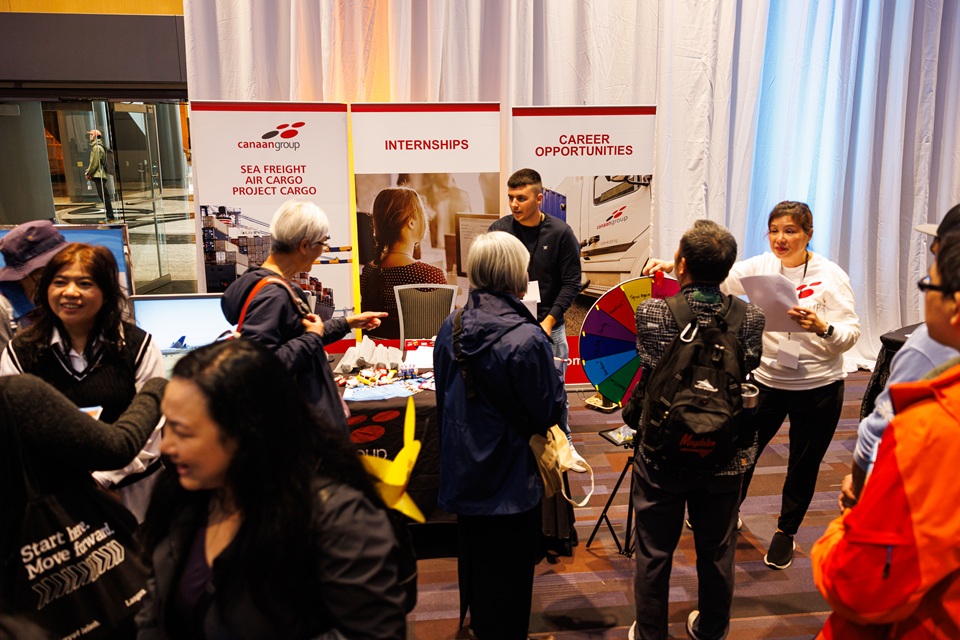
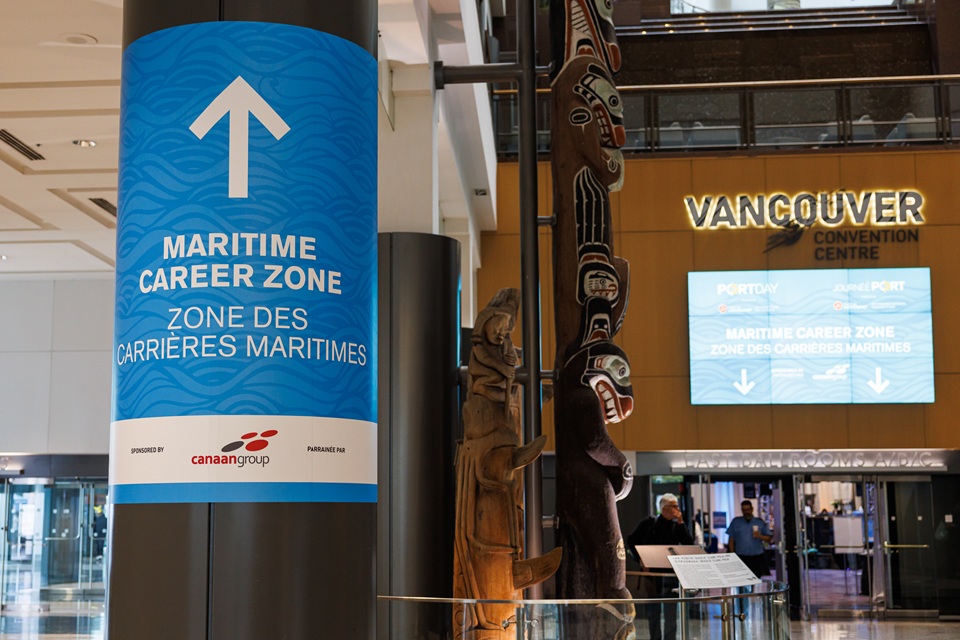
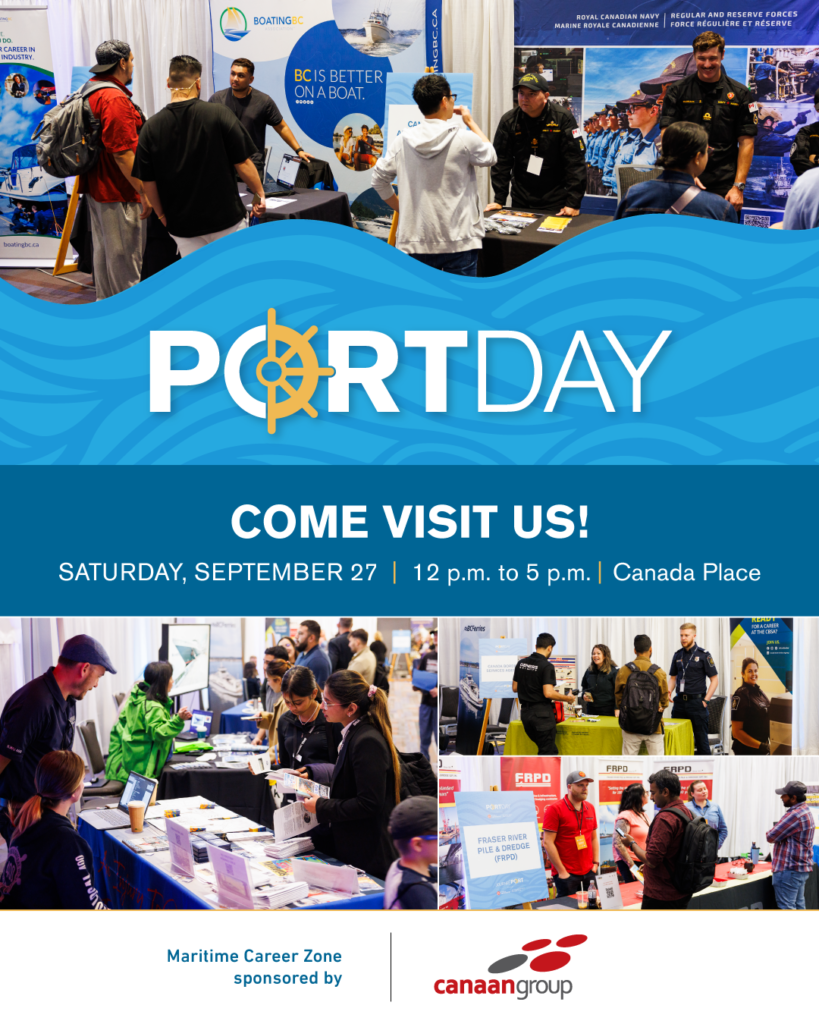
Canaan Group was proud to sponsor the Career Zone at this year’s Port Day and join our partners and colleagues who work in the maritime industry in promoting work opportunities in this vital sector. 

As one of the few freight forwarders present at the event, we were excited to share our unique perspective on global trade and logistics. We enjoyed great conversations with a diversity of attendees, including mechanical engineers, software developers, and many recent grads or students. 

One memorable conversation was with a Fishery Enforcement Agent who emphasized the importance of educating others about the environmental impact of marine vessels—especially on wildlife like whales. It was a powerful reminder that the maritime industry isn’t just about cargo and commerce; it’s also deeply connected to sustainability and stewardship — two values that motivate us at Canaan Group and at the Port of Vancouver

And it was a joy to talk to teachers from elementary and high schools who attended the event to gather insights they could bring back to their classrooms, to spark curiosity about an industry that is central to Vancouver’s identity as a major port city. 

Canaan Group stood out by showcasing the breadth of career opportunities available in freight forwarding—from operations and logistics to technology and global trade strategy. While many exhibitors focused on engineering and manual labor roles, we highlighted the importance of digital innovation and cross-border coordination. Our booth offered a glimpse into a multifaceted industry that’s evolving rapidly and always looking for fresh talent.

Thank you to everyone who came out to this event — we valued the conversations we had with each of you! And we’d love to keep the conversations going. If you are in need of logistic support from a longstanding company that is invested in strengthening not just our industries but also our cities and our country as a whole, or are wanting to explore a career in logistics, please don’t hesitate to reach out!

Inside Track: Building Trust Through Global Connections

Lucas Lee Events, Featured, Uncategorized

A successful network is built on one thing above all else: trust. And trust is earned not just through emails and calls, but by showing up—meeting partners at their own locations and understanding their local context.

For the past 17 years, Tandem Global Logistics has held its annual conference at a different location around the world. Last year, our partners gathered in The Netherlands where you will also find our headquarters; next April, we’ll meet in Brazil. These gatherings are designed for more than just presentations—they are about building and strengthening one-on-one relationships, solving ongoing issues, and creating new opportunities together. Unlike most other networks who are usually non-exclusive, Tandem is unique in that each country is represented by only one company, that can provide the full range of freight forwarding related services, ensuring commitment, focus, and exclusivity.

This fall, Canaan Group (Tandem Canada) has taken on a new challenge: visiting every Tandem office worldwide at least once. The purpose is simple—relationships matter most when built face-to-face. As Patrick and Perry Lo have built Canaan over the last 27 years (as a second-generation family business dating back to 1981), the foundation has always been clear: “People do business with people, not businesses.”

First Stop: The Philippines

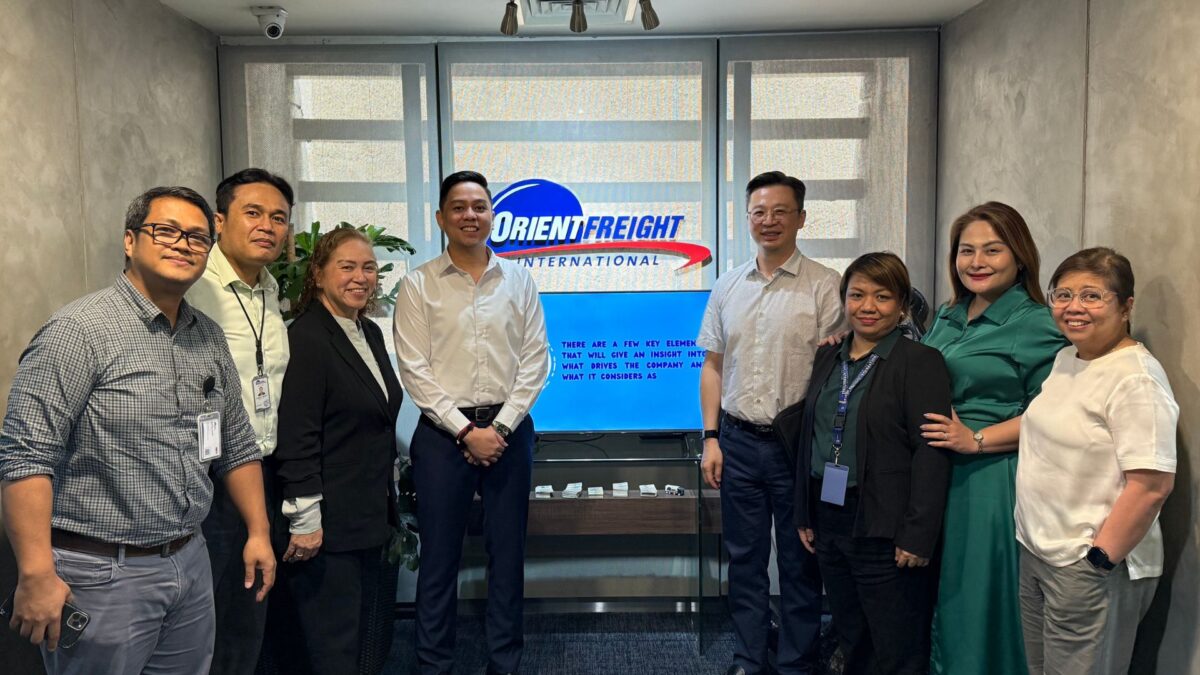
One of the first visits was to Orient Freight International (Tandem Philippines) in Makati City, the historic and vibrant business district of Manila. Patrick met with Fred Santos, General Manager (formerly with Kuehne + Nagel for 8 years), alongside his talented team:

  • Helen Mapoy, Senior Freight Manager
  • Archie Vidon, Strategic Business Lead Cold Chain
  • Cresencio S. Martin, Strategic Business Lead Agri Logistics
  • Karen Gojar, CFS Manager
  • Annie Belino, Logistics Manager

What many may not know is that Orient Freight is part of a larger conglomerate of over 15 companies, making them a strong partner not only in logistics but also in diversified industries.

Why Southeast Asia Matters

With U.S. tariffs reshaping global trade, many Canadian companies are actively diversifying beyond the U.S. and China, turning their attention to Southeast Asia. Manufacturing is shifting to Vietnam, Indonesia, Cambodia, Malaysia, and importantly, the Philippines. The Philippines offers a unique advantage: low operating costs combined with an English-speaking workforce—a powerful asset in global trade.

During this visit, Patrick also met with Charleen Ferrer, Trade Commissioner from the Government of Canada, reflecting our commitment to engage not only with our Tandem partners but also with local trade consulates in every city we visit.

Looking Ahead

We look forward to deepening our partnership with Orient Freight International and continuing our global journey to strengthen Tandem’s worldwide network. At Canaan Group, we believe that the best opportunities come when we take the time to meet people where they are—because strong businesses are always built on strong relationships.

Explore career opportunities with us on Sept 27!

Lucas Lee Events, Featured, Uncategorized

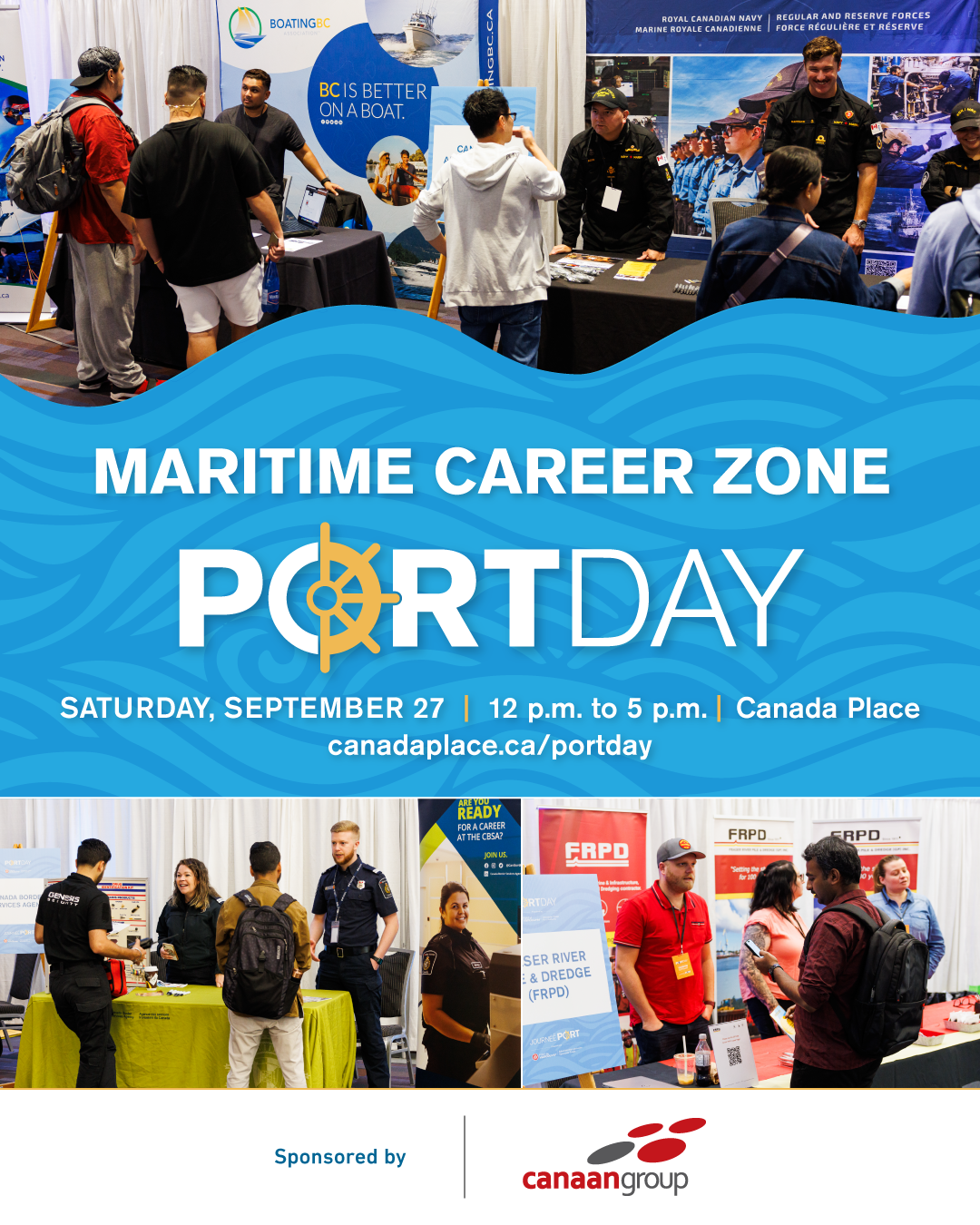
Canaan Group is excited to be a sponsor of the Maritime Career Zone for this year’s Port Day event. Stop by our booth and let us answer all the questions you might have about working in the logistics industry.

There will be many more booths to peruse! Whether you’re drawn to the call of the sea or prefer to stay anchored on land, the maritime industry offers opportunities for everyone.

📅 Saturday, September 27
📍 Canada Place (indoors & outdoors)
💵 Free admission

👉🏽Check out canadaplace.ca/portday for more info!

Standing Strong with B.C.’s Lumber Industry: Insights from the Global Buyers Mission

Lucas Lee Featured, News, Uncategorized

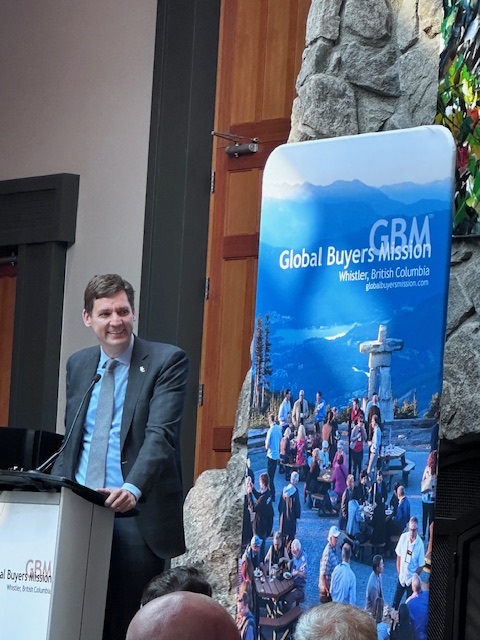
It was an honour to again join almost 700 leaders, representatives, and longstanding partners from the lumber industry at the Global Buyers Mission in Whistler last weekend! At a time when B.C.’s lumber sector is facing enormous pressure from nearly every direction, this was an important opportunity to hear from partners past and present and reiterate Canaan’s commitment to providing the infrastructure, expertise, and flexibility that lumber companies need to thrive, even in challenging times. 

Among the highlights from the event was Premier David Eby’s keynote address, in which he spoke strongly in support of the forestry industry, referencing Prime Minister Mark Carney’s recent announcement of new federal funding aimed at stabilizing, protecting, and revitalizing one of B.C.’s cornerstone industries.

In our many conversations with various delegates — most of whom we have worked with throughout our 40 years of experience in the lumber industry — we heard concerns around declining log supply, the number and size of wildfires every summer, and the continued closure of sawmills due to weak market conditions. And, of course, at the top of many participants’ minds was U.S. tariffs—now exceeding 35%—on softwood lumber, driven by claims that B.C.’s forest industry benefits unfairly from Crown land subsidies. More than ever, companies are seeking reliable, experienced partners who can help them navigate logistical complexity and not just maintain operations but seek out opportunities for growth.

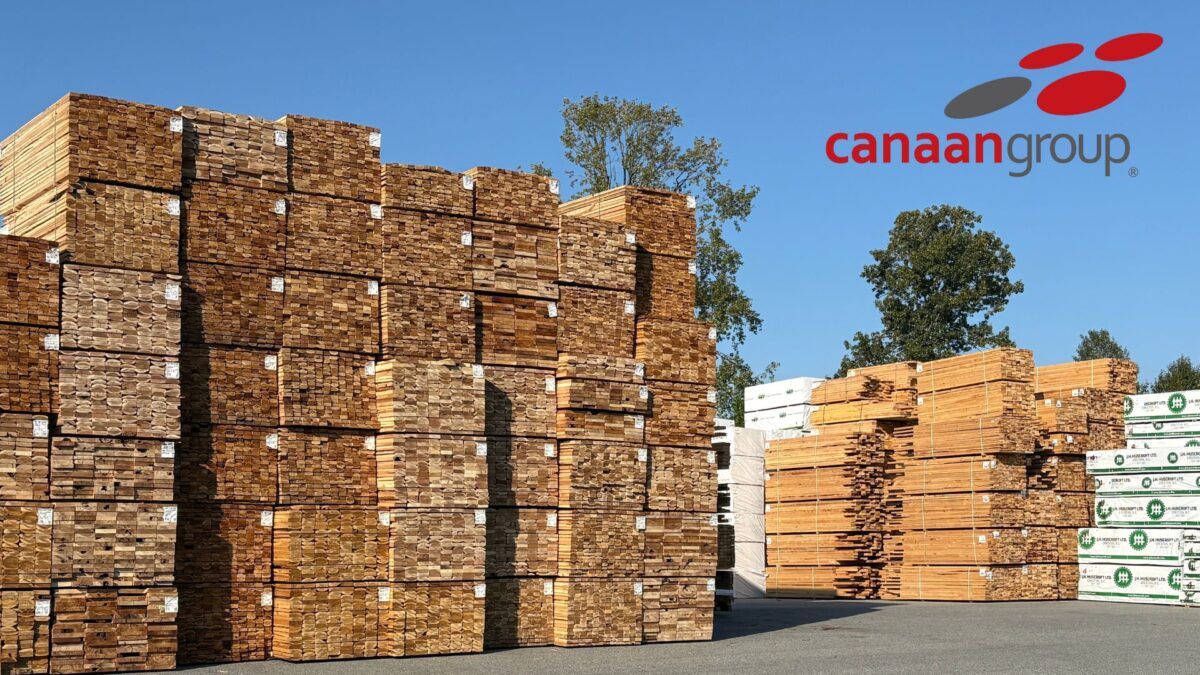
Canaan is proud of our reputation as a dependable partner for end-to-end logistics support. Our Modern Terminal warehouse is one of the most recognized lumber loading facilities in the region, trusted by many GBM participants past and present. From forwarding to loading, we offer a seamless one-stop solution tailored to the unique demands of the forestry sector.

As your company confronts new realities, Canaan is ready — as we have been for nearly half a century — to come alongside you with the wisdom of experience, a commitment to unrivaled customer service, and the capacity to adapt and innovate when needed.

Let’s continue our conversations! Reach out today at sales@canaangroup.ca

Canaan Group Drives Into the Future with First-Ever Peterbilt 579EV Deployment in Metro Vancouver

Lucas Lee Featured, News, Uncategorized

Canaan Group, a leading Canadian logistics provider, has placed an order for its first Peterbilt 579EV electric tractor, boasting a Gross Combined Weight (GCW) capacity of 105,500 lbs. In a move designed to slash carbon emissions in terminal drayage, the company is also installing an on‑site 80 kW dual‑plug charging station—enough to power two electric trucks simultaneously—at its Richmond facility.

Through a strategic partnership with the Port of Vancouver and local clean‐energy firm 7th Generation, Canaan Group will become one of the very first Canadian carriers to deploy Class 8 electric trucks for container haulage. “We’re committed to delivering not just cargo, but also on our promise to reduce Scope 3 emissions in our customers’ supply chains,” said Patrick Lo, President & CEO of Canaan Group. “This investment marks a significant step toward our vision of a fully electrified drayage fleet.”

Currently, the new 579EV and charging station are undergoing rigorous testing and certification; full implementation is slated for Q3 2025. Retail importers and forestry exporters—two key segments of Canaan’s customer base—have increasingly demanded greener logistics solutions, tracking their indirect (Scope 3) emissions with greater scrutiny. By integrating the 579EV and supporting infrastructure, Canaan Group expects to eliminate up to 200 tonnes of CO₂ per truck, per year, compared to diesel counterparts.

Beyond trucking, Canaan Group has forged alliances with several “green‐shipping” container shipping companies, enabling customers to pool their environmental commitments across multiple transport modes. “We want to give our partners end‑to‑end visibility on their carbon footprint,” added Lo. For more information on Canaan Group’s electric‑truck program or to arrange a site visit, please contact the Marketing & Communications team at info@canaangroup.ca

Here’s a quick look at the newest addition to our fleet!

Uncertainty of Tariffs for Canadian exporters and US importers

Lucas Lee Featured, News, Uncategorized

By August 1, the U.S. is set to impose a 35 percent tariff on all Canadian goods and up to 30 percent on European Union automotive imports—measures that follow earlier levies on steel, aluminum, and auto parts. Yet with most shipments already moved into U.S. ports by July 10, these new deadlines may have limited immediate impact. Still, they’ve driven hefty write‑downs for several manufacturers in the US and prompted exporters to accelerate deliveries. 

The bigger question: will August 1 be the final tariff trigger, or might rates shift again? In any case, the added uncertainty and cost pressure are expected to depress import volumes moving forward, as shippers and buyers adjust to a more volatile trade environment.  Canaan continues to monitor daily and weekly fluctuations in transportation costs. Please contact us sales@canaangroup.ca

Future of North America infrastructure looks positive

Lucas Lee Featured, News, Uncategorized

As global trade pushes the limits of today’s ports, three gateways on North America’s coasts are quietly rewriting their blueprints to welcome the next generation of ultra‑large container ships.

On Canada’s West Coast, the Vancouver Fraser Port Authority is gearing up for a landmark milestone. This July it will invite construction partners to help build Roberts Bank Terminal 2—a massive reclamation and wharf complex that, by the mid‑2030s, will move over $100 billion of goods each year. With Indigenous consent secured from 27 partner nations, the project promises more than 18,000 construction jobs and 17,000 permanent roles, injecting $3 billion annually into Canada’s GDP. By choosing a progressive design‑build approach, Vancouver is ensuring flexibility, collaboration and cost certainty every step of the way.

Farther south, in Long Beach, the International Transportation Service terminal is mid‑stride through a $365 million makeover. Filling in a 19‑acre slip will transform two awkwardly separated yards into a 277‑acre, square‑shaped powerhouse—complete with 3,500 feet of berth capable of handling two 18,000‑TEU giants at once. A new gate complex and modern terminal‑operating system will slash truck wait times, while a pledge to electrify all cargo‑handling gear by 2030 and expand on‑dock rail underscores Long Beach’s green ambitions.

On the East Coast, Savannah’s rise has been nothing short of meteoric—5.6 million TEUs in 2024 made it the nation’s fastest‑growing gateway. To keep pace, Georgia Ports has already opened a temporary lay berth at Ocean Terminal, cutting idle time by 75 percent and freeing up capacity for another million TEUs annually. By 2028, yard renovations will add another 1.5 million TEUs, and Phase I of a new Hutchinson Island terminal—targeted for 2030—will bring three more deep‑water berths and 3.5 million TEUs of space as part of a $4 billion, coast‑to‑coast capacity surge.

Together, these projects represent more than concrete and steel—they’re blueprints for resilience. By expanding berths, modernizing technology and weaving in cleaner energy and rail, Vancouver, Long Beach and Savannah are preparing not just for bigger ships, but for stronger, more sustainable supply chains that will serve North America well into the 2030s.

Red Sea Shipping Shortcut Unlikely Before Q3 as Houthi Attacks Persist

Lucas Lee Featured, News, Uncategorized

The Bab el‑Mandab corridor—through which roughly $1 trillion in goods flow annually—has become a frontline in ongoing violent conflict. On July 7, the Liberian‑flagged Magic Seas was ambushed by Houthi drones, missiles and explosive boats, forcing its crew into lifeboats before the vessel sank. Barely 24 hours later, the bulk carrier Eternity C, carrying 22 Filipino seafarers and one Greek security officer, was struck in a similarly coordinated assault; rescuers ultimately recovered ten survivors (eight Filipinos among them), while four crew are now presumed dead and eleven remain missing as search efforts were called off amid ongoing rebel threats 

Once seen as a potential Q3 shortcut, the Red Sea now looks closed to container shipping for months to come. Daily vessel traffic through Bab el‑Mandab has plunged from nearly 80 ships a day in late 2023 to just 32–35 in early July, while insurance premiums have more than doubled. With EU naval escorts averaging fewer than one warship per day, and BIMCO warning that current attacks won’t shift established shipping patterns, a return to Red Sea transits before the third quarter appears increasingly unlikely.

High-risk zones re-activated by Transport Canada as wildfire season sets new records

Lucas Lee Featured, News, Uncategorized

Western Canada’s 2025 wildfire season has already scorched massive swaths of forest—over 703,000 ha in B.C. and 663,000 ha in Alberta as of mid‑July—making it one of the most severe on record.

Blazes have crept close to critical rail lines, forcing Canadian National to suspend service on its northern B.C. subdivisions (e.g., Fort Nelson) and pause traffic through fire‑threatened corridors like Jasper National Park while crews inspect and repair track damage (Reuters; The Albertan).

Transport Canada has re‑activated ministerial orders in high‑risk zones, mandating both CN and CP to cut train speeds, boost trackside fire‑spotting patrols, and reroute or halt movements wherever fires endanger the right‑of‑way (Reuters).

At the Port of Vancouver, rail links into and out of the terminals were recently halted as wildfires encircled the yard, creating a backlog of container trains while CN and CP work with authorities to resume safe operations (PSA BDP).

Canadian Pacific has similarly paused service on interior routes, deployed specialized fire‑suppression trains along its corridors, and partnered with the BC Wildfire Service to monitor hotspots—measures that, collectively, are reshaping rail logistics until the fire season abates.

Inside Track: The importance of meeting face-to-face

Lucas Lee Featured, News, Uncategorized

While recent headlines highlight a shift in manufacturing from China to Vietnam, this trend has actually been unfolding for over a decade. Many Chinese companies have been steadily relocating operations to Vietnam, drawn by favorable economic conditions and strategic advantages.

Even with the looming threat of new U.S. tariffs on Vietnamese exports, the country continues to benefit from this manufacturing migration. A testament to Vietnam’s growing importance in global trade, CMA CGM announced a USD $600 million investment recently in partnership with Saigon New Port Corporation. Together, they will develop a new deep-sea port in Haiphong, Northern Vietnam, with an expected capacity of 1.9 million TEU and operations slated to begin in 2028.

In light of these exciting developments, Eric Magraner, overseas development coordinator at Canaan Group, visited with our Tandem Global Logistics Vietnam partner in Danang. While Danang is often seen as a resort and tourist destination, it is also a significant export hub—especially for trade between Vietnam and Canada.

With more Canadian companies asking us to help them explore new markets, Vietnam has become a top priority for Tandem. The country presents vast opportunities, and we are committed to building strong local partnerships to serve our clients better.

Most recently, our client Olympic Industries was exploring opportunities in Vietnam and needed a reliable logistics partner. We connected them with Headway, and they were able to meet in person to explore possibilities—demonstrating the value of face-to-face interaction in building business relationships.

At Tandem Canada and Tandem Vietnam, we believe that personal connection is key to strengthening the Tandem brand. We’re grateful to our Vietnamese partners for their warm hospitality and continued collaboration.

Inside Track: The Extra Mile

Lucas Lee Featured, News, Uncategorized

At Canaan, people are our priority, which is what motivates our unrivaled commitment to customer service. When companies are deciding which freight forwarder to partner with to deliver a shipment, the value of a hands-on approach may not be immediately evident in the initial calculations. But our experience has shown us time and again that extra care given to each of our customers pays off not just in providing a better experience but also for the bottom line.  

Here are two recent examples: 

One of our regular clients had unknowingly filled, and delivered to the terminal, a container that did not belong to the ocean carrier preparing to ship their goods overseas. The error was traced back to the release of the empty at the container depot, leaving the customer in a tough spot of resolving the issue with the shipping line with not much time to spare. 

The shipping line was insistent that the client unload the container and pay storage and gate fees, which meant not just a cost in fees but also a labour cost in dealing with a split booking. 

Owing to our established relationships with the shipping lines, and our willingness to advocate on behalf of our customers, we facilitated a better solution: identifying the right person to provide approval, we arranged for the container to remain onboard “on hire” and were able to assure the customer, who was under pressure to unload, that the issue was resolvable without further action on their part. The shipment stayed intact and was delivered on time, with no extra fees.

Another example: Sometimes, the Biblical analogy of the “extra mile” is quite literal. One of our clients was in need of the physical delivery of signed papers in order for a shipment to be released without any delays. The turnaround was extremely tight. Rather than have our client anxiously track the document through the courier’s online system — without any real control of the timing — we took it upon ourselves to ensure delivery. Once we were told the document had arrived in Vancouver, we went to pick it up ourselves and then we crossed town to deliver it to the office in which it needed to be scanned so that confirmation could be sent to another city. Our experience and willingness to literally take extra steps allowed us to navigate an admittedly inefficient process as efficiently as possible — seeing a way through where other companies might have seen a dead end.

If you are unsure of which freight forwarder is right for you, a helpful question to ask is: can I rely on them to advocate for my company should something not go as planned? At Canaan, the “extra mile” is not extra, it’s part of our commitment to always deliver as promised for all of our clients. 

We’re keen to extend our services to you. Reach out today sales@canaangroup.ca

Inside Track: The Critical Role of Supply Chain Expertise in Humanitarian Aid

Lucas Lee Featured, News, Uncategorized

It has long been a core commitment of Canaan Group to be ready with supply chain solutions in times of crisis. In 1995, following the Great Hanshin earthquake near Kobe, Japan, Canaan facilitated the delivery of lumber by air after the ports were destroyed. After the 2011 Tohoku earthquake and tsunami we again joined the relief efforts by helping with the delivery of much needed supplies. 

Climate change is sadly increasing the frequency and severity of natural disasters. And it will be people who are living in areas that already experience infrastructure challenges that will be most affected. Equally challenging is getting medical equipment and food supplies to regions ravaged by war and violence, as we are currently witnessing in Palestine. 

When disaster strikes, humanitarian aid agencies and non-profit organizations are experts at quickly identifying what supplies are needed and raising support, but they rely on logistics experts to determine how to efficiently deliver goods, particularly when conventional routes are not available. 

Established logistics partnerships are critical, as it will often not be at the available major port of entry that the supplies are most needed. Knowing who on the receiving end can be relied on to complete the delivery — whether via boat or air to a smaller island, or along roads in which blockages or safety may be a concern — comes from experience working across the globe and with a diversity of businesses and organizations. 

Since Russia’s invasion of Ukraine, we have worked with non-profit organizations in the delivery of crucial supplies — arriving first to a safe port in a neighbouring country and then taken into Ukraine with the help of transportation partners who understand the most current situation on the ground. Leaning again on our global partnerships, we also helped a non-profit organization ship a rig for drilling water wells to an area of West Africa where clean drinking water is scarce. 

Cost efficiency is a key issue in humanitarian work. Though there is often a brief outpouring of donations for disasters that make headlines, a lot of much needed humanitarian work happens without adequate public attention or financial support. Even if equipment can be procured at a discount or even by donation, there remains the cost of shipping and this type of project is unlikely to get much “free media.” 

A good example of this is retired emergency vehicles, which Canaan helps to ship out of Canada. Fire ladder trucks and pumper trucks that are decommissioned in Canada can still be newer than the “newest” vehicle that the receiving fire brigades have in their garage. We have also shipped a lot of medical equipment, particularly to more remote locations where healthcare facilities can’t easily bring in basic necessities. Hospital beds, scanning and diagnostic machines, and general hospital ward supplies are commonly lacking in hospitals in developing countries. If someone has usable equipment for donation, we can work with NPOs to get it where it needs to go. 

Canaan’s success in helping businesses with their shipping needs has positioned us to also extend that expertise to non-profit organizations, helping them keep their important work viable. If logistics is the unsolved piece in your humanitarian project, we would love to partner with you in finding an efficient solution to getting shipments delivered safely. Reach out to us today! sales@canaangroup.ca

Inside Track: Who’s Behind the Wheel? Honouring the People Driving Our IndustryInside Track:

Lucas Lee Featured, News, Uncategorized

In logistics as in many other industries, 2025 has so far marked by uncertainty — threats of tariffs and of market volatility and of prolonged global conflict. Throughout our 44 years, Canaan has navigated times of opportunity and of challenge, but one thing has always proved to be the key to success: putting people first. The term “Business to business” can be a bit misleading — even in something as complex as the supply chain, the most important interactions are always person to person.

This year we hope to shine a spotlight on the people who are essential to the logistics industry. Today, we’re starting with the trucking community. Truck drivers are the true heroes of global trade, but too often they are either ignored or blamed for things largely outside of their control, such as traffic congestion. 

In the video below, we’re giving you a glimpse into the story of Gary, one of the most highly rated drivers on our team and someone whose friendly smile brings joy to each of his daily interactions, whether that’s in our office or at a toll booth or when completing a delivery.

At Canaan, we recognize and appreciate the dedication of drivers like Gary. They are the backbone of logistics, providing vital support for not just our company but the entire economy. Without them, supply chains stall, shelves go empty, and businesses grind to a halt. Their commitment often goes unnoticed, but it shouldn’t.

So here’s to Gary and all the truckers out there—navigating long hours, unpredictable conditions, and demanding schedules to keep our world running!

Inside Track: On the ground at TPM25

Lucas Lee Featured, News, Uncategorized

A report from TPM25 from Patrick Lo, President and CEO, Canaan Group.

It has been just over a week since TPM25 wrapped up, and as always, reflecting on the speakers, conversations with customers, discussions with shipping lines, and emerging technologies leaves me with plenty to consider. While there’s no crystal ball to predict 2025 with certainty, here are a few key takeaways that stood out:


– As we do every year, industry experts and economists are analyzing the delicate balance of supply and demand, factoring in new ship deliveries and the scrapping of older vessels. The consensus points to a 1-2% increase in global TEU capacity. If tensions in the Red Sea ease, rerouting vessels back through the Suez instead of the Cape of Good Hope will further increase available capacity. However, supply is only part of the equation—the real uncertainty lies in demand, especially with tariff disputes between the U.S. and its trading partners adding another layer of complexity.

– After a year of discussions, Hapag-Lloyd and Maersk Gemini service officially launched in February. This week, I had the opportunity to attend Hapag-Lloyd’s ceremony for the Frankfurt Express at DP World Vancouver. Reliability as a value proposition—rather than just price—has the potential to be a game-changer, particularly for customers who depend on consistent transit times.

– Once again, TPM was flooded with visibility platform providers. However, there’s a sense that interest may be waning as companies recognize that visibility alone doesn’t change outcomes. While a few AI-driven solutions were showcased, we’re only at the beginning of seeing how AI will streamline operations, reduce headcount, and drive greater efficiency.

– The “China Plus One” strategy remains a dominant theme in 2025. Companies continue to explore alternative sourcing and manufacturing hubs such as Vietnam, Thailand, and India. While there’s ongoing interest in reshoring production to the U.S., the cost gap remains a significant barrier compared to other markets.

– With ongoing uncertainty, businesses continue to navigate the trade-off between Just-in-Time (JIT) and Just-in-Case (JIC) supply chain models. Those reliant on weekly shipments are diversifying their risk through alternative routings and suppliers—much like investors managing a stock portfolio to balance returns. This remains a key focus for North American importers in 2025.

As we move forward, these themes will continue to shape global trade. The question isn’t just about what’s changing—but how businesses will adapt to stay ahead. Once again, always appreciate Eric Johnson and Mark Szakonyi for setting up incredible speakers and organization of the event.

Inside Track: Beating the Clock on the Eve of a Trade War

Lucas Lee Featured, News, Uncategorized

The United States’ decision to instigate trade wars with multiple countries, including Canada, has left many businesses scrambling to avoid undue harm to their operations and bottom line. 

Canaan is committed to supporting its clients in navigating this volatility. Here’s one example of how our freight forwarding expertise has been able to help:

One of our clients reached out to us with the urgent need to ship a 300,000 USD consignment from Alberta to Idaho before the 25% tariff was implemented on March 4. The cost of not making the deadline was around $75,000 to the client. 

With many other companies facing the same predicament, having access to a reliable transportation network was critical. We had a trusted driver that we have an established relationship with who was willing to take on the job for us on short notice. 

Additionally, any delay in customs clearance could have resulted in the shipment crossing the border past the deadline. Our coordination and expertise ensured prompt, smooth customs clearance amid high volume at the border.

The result of our coordination: the shipment crossed the border with plenty of time to spare before the midnight deadline, avoiding any additional duties for our client. A reason to celebrate amidst a stressful time for many businesses!

If you need support in trying to minimize damage to your company during this time of political upheaval, please reach out to us. Our customs experts can help you verify the most current situation with regard to tariffs and our transportation experts will ensure your shipments make it to their destination as efficiently as possible even, and especially, during the busiest times. Reach out at sales@canaangroup.ca. We’re a Canadian company proudly supporting local businesses.

Inside Track: How a Freight Forwarder Pulls Off the “Impossible”

Lucas Lee Featured, News, Uncategorized

At Canaan, we are proud of the work we do to help our clients with the “regular” tasks of ensuring their shipments arrive on time. We also love taking on the challenging, unexpected assignments that allow our expertise and dedication to truly shine.

Among the services we provide, air freight perhaps best represents Canaan’s ability to react and adapt quickly, as cargo shipped by air is often incredibly time-sensitive. Our air freight team is available 24 hours a day to ensure a job gets done right.

A recent example:

A client needed help with an urgent air shipment to Oregon from China — normally a straightforward job, but in this circumstance, the size and timing of the shipment required special troubleshooting.

The shipment involved transporting 12 pallets of urgently needed machinery, weighing a total of 4,000 kg, to avert a potential line down situation for their client. Additionally, this needed to get from one region in China to Shanghai for export before operations shut down for the biggest holiday of the year: the Lunar New Year (Spring Festival). A crucial first tactic was splitting the shipment into two parts to make it more manageable and to create more shipping options.

As an IATA member since 1988, and with four decades of relationship building across various industries and in different countries, Canaan has the ability to procure space, liaise with airlines, and provide consistent delivery times even in peak seasons. We are proud of our Canadian roots and also of our international expertise; we have first-hand knowledge of airport capacity across North America, and particularly in the Pacific Northwest. Our expertise allows us to problem-solve quickly, without needing to wait for explanations from outside parties.

All of this informed our decision to arrange air freight to Seattle-Tacoma International Airport (SeaTac) instead of Portland, due to the latter’s limited availability of widebody international flights. This decision helped with both cost-effectiveness and scheduling — with more flights available to SeaTac, there was a higher likelihood of the freight not being bumped or delayed due to high passenger aircraft occupancy.

The first shipment of 7 pallets arrived first, followed by the 5-pallet shipment a couple of days later. To minimize costs, we arranged for the trucker to hold onto the 7-pallet shipment until the 5 pallets were picked up as well. This strategic move allowed for all 12 pallets to be delivered together to the consignee’s door at a reasonable cost, successfully averting the line down situation.

We are confident that our customer service is unmatched among logistics companies based in Western Canada, in air freight and across all our services. This dedication to delivering as promised has earned us a loyal client base, for which we are grateful. These strong, lasting relationships motivate us in achieving the “impossible” for our clients, whether it be obtaining protective equipment during a pandemic or shipping urgently needed equipment at the busiest time of the year to keep operations running. If you are in need of assistance, please reach out to us today: sales@canaangroup.ca