 Request Quote
 Book Shipment
 Meet with Us

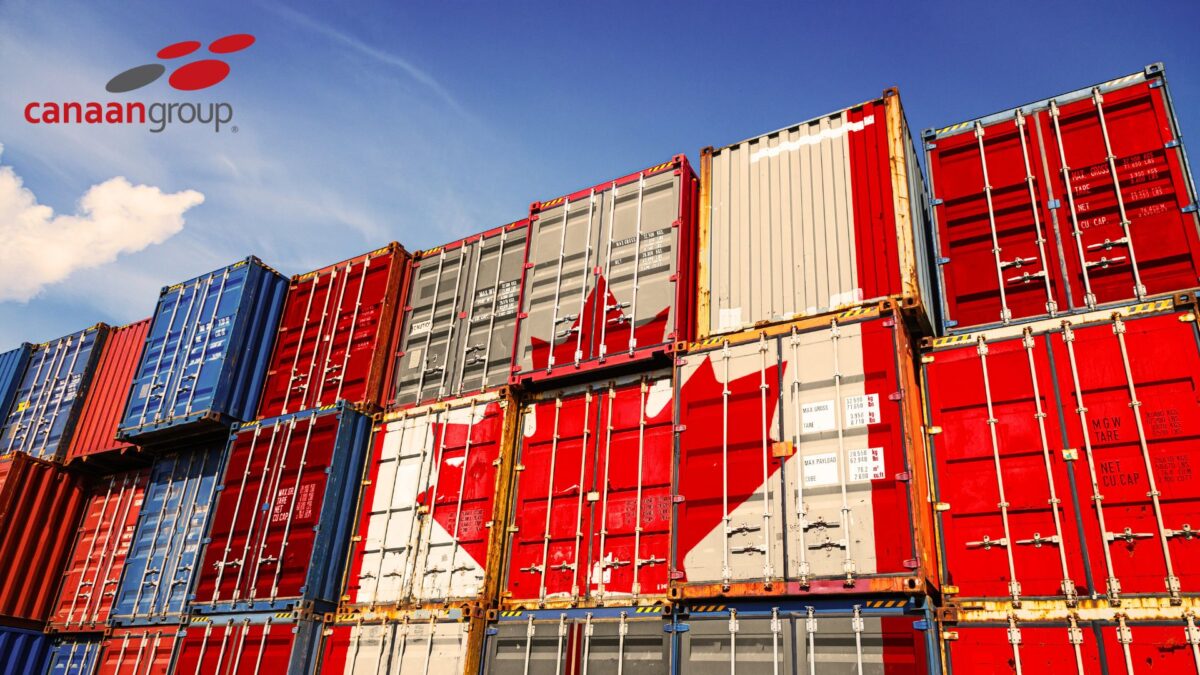
As 2025 comes to a close, one theme clearly defined Canada’s logistics and trade environment: transition. From digital compliance and trade policy volatility to rising costs and efficiency pressures, the industry experienced meaningful change. At Canaan Group, these shifts were not surprises—we positioned ourselves early to help customers navigate them with confidence.
Below are the three defining takeaways from 2025 and how Canaan responded.
1. Canada’s Logistics Industry Took a Major Step Toward Digitalization
2025 marked a clear acceleration in Canada’s move toward a more digital logistics ecosystem.
The rollout of CARM (CBSA Assessment and Revenue Management) fundamentally changed how duties, taxes, and security are managed. At the same time, shipping lines such as Hapag-Lloyd advanced initiatives around e-Bills of Lading, signaling a broader shift toward paperless trade documentation. Across the industry, online platforms and automation tools continued to gain traction as stakeholders sought greater visibility, speed, and compliance.
Canaan was well positioned for this transition. Our customs brokerage, systems, and internal workflows were already aligned with digital processes, allowing us to guide customers through CARM implementation while supporting the industry’s broader move toward automation and data-driven logistics.
Digital trade is no longer optional—it is becoming the standard.
2. Tariffs Dominated the First Half of the Year—and Reinforced the Value of Expertise
Few topics created more stress in 2025 than tariffs.
The first six months were marked by uncertainty, frequent changes, and heightened scrutiny. Most recently, Canada’s updates to steel tariffs and quota frameworks, including public commentary from Mark Carney, added another layer of complexity for importers.
Because Canaan is a licensed customs broker, we were able to interpret these changes quickly, advise clients accurately, and reduce disruption during an otherwise chaotic period. More importantly, these pressures pushed many Canadian companies—particularly in Alberta and British Columbia, given their proximity to transpacific trade—to rethink product sourcing and market strategies.
This is where preparation mattered most.
3. TradeSuccess: Supporting Market Diversification and What Comes Next
In November 2024, Canaan launched a new division: TradeSuccess.
Throughout 2025, TradeSuccess supported Canadian companies exploring new products and new markets, with a particular focus on China and Southeast Asia. The goal was not just compliance, but growth—helping clients understand trade structures, tariffs, sourcing strategies, and market entry considerations in an increasingly complex global environment.
As costs continue to rise across the supply chain—through terminal fees, labor, tariffs, and regulatory requirements—operational efficiency has become a top priority for shippers.
Canaan continues to invest in automation tools and digital workflows to help clients operate smarter, not harder.
Looking ahead, TradeSuccess will be a major focus in 2026 as we expand this capability to support deeper market intelligence, diversification strategies, and end-to-end trade advisory.